

Innovation
Jensen Huang and the Architecture of an AI Empire
Tamara Edwards10 min read
A new generation of manufacturers is rebuilding what offshoring dismantled. Driven by technology, supply chain lessons, and a renewed sense of national purpose, domestic production is having a genuine moment.

Digital Marketing & Tech Contributor
For decades, the story of American manufacturing was one of departure. Factories closed. Jobs moved overseas. Entire communities built around steel mills, textile plants, and electronics assembly lines watched their economic foundations quietly disappear. The logic seemed airtight: labor was cheaper elsewhere, and global supply chains made it easy to source almost anything from almost anywhere.
Then the pandemic happened. And then the chip shortage. And then the port backlogs. And then the geopolitical tensions that made "almost anywhere" feel considerably less reliable than it once had.
What followed was not a nostalgic return to the past. It was something more interesting: a genuine rethinking of where things get made, why it matters, and what American manufacturing could look like when it is rebuilt from scratch with modern tools, modern values, and a clearer understanding of what went wrong the first time.
The numbers tell a striking story. According to the Reshoring Initiative, more than 350,000 manufacturing jobs were announced as returning to the United States in 2023 alone, a record at the time. Semiconductor fabrication plants, electric vehicle battery facilities, pharmaceutical production lines, and advanced materials factories are being built or expanded across the country at a pace not seen in a generation.
The CHIPS and Science Act, signed into law in 2022, committed more than $52 billion to domestic semiconductor manufacturing and research. The Inflation Reduction Act layered on hundreds of billions more in incentives for clean energy manufacturing. These were not modest policy nudges. They were structural bets that the United States needed to rebuild industrial capacity it had spent thirty years giving away.
But federal policy alone does not explain what is happening. The more interesting story is in the companies themselves, and in the entrepreneurs who decided that making things in America was not just patriotic posturing but a genuine competitive strategy.
The original case for offshoring was almost entirely about labor costs. When you can pay a worker in Shenzhen a fraction of what you pay a worker in Ohio, the arithmetic is hard to argue with. But that arithmetic has been quietly shifting for years.
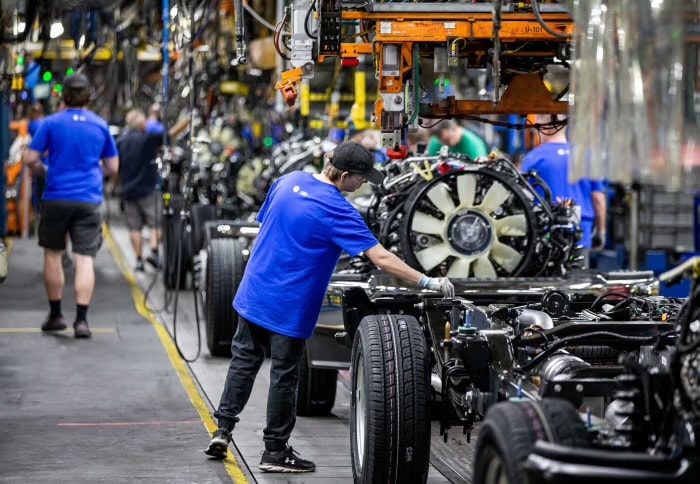
Automation, robotics, and advanced software have dramatically reduced the labor content of many manufactured goods. A modern factory floor looks nothing like the one that closed twenty years ago. Collaborative robots handle repetitive assembly tasks. Computer vision systems catch defects that human inspectors would miss. Digital twins allow engineers to simulate an entire production line before a single machine is installed.
When labor is a smaller share of total production cost, the advantage of cheap overseas labor shrinks. And when you factor in the full cost of a global supply chain, including shipping, inventory buffers, quality control delays, and the risk of disruption, domestic production starts to look considerably more attractive than the simple wage comparison suggested.
"When you factor in the full cost of a global supply chain, domestic production starts to look considerably more attractive than the simple wage comparison suggested."
Some of the most compelling examples of the new American manufacturing wave are not the giant semiconductor fabs making headlines. They are smaller, more nimble companies that have built domestic production into their brand identity and their business model simultaneously.
Shinola, the Detroit-based watchmaker and lifestyle brand, built its entire identity around American craftsmanship at a time when that was deeply unfashionable. The company opened its factory in Detroit in 2012, trained local workers in watchmaking, and turned the story of domestic production into a marketing asset that resonated with consumers willing to pay a premium for it. The watches are not cheap. That is partly the point.
American Giant, the apparel company, made a similar bet on domestic manufacturing in an industry that had almost entirely abandoned it. Founded in 2011 with a simple premise, that it was possible to make high-quality basics in the United States and sell them at a fair price, the company became something of a cultural touchstone when a journalist called its hoodie "the greatest hoodie ever made." The waiting list that followed was not something the company had planned for.
In the electric vehicle space, Rivian built its manufacturing operations in Normal, Illinois, a deliberate choice to anchor production in the American heartland. Tesla's Gigafactory in Texas and its original facility in Fremont, California represent a similar commitment to domestic production at scale. These are not small operations hedging their bets. They are major capital commitments to the idea that the future of transportation can be built here.
Perhaps the most lasting legacy of the pandemic-era supply chain crisis is not the disruption itself but the strategic rethinking it forced. Companies that had optimized their supply chains for efficiency, running lean inventories and relying on just-in-time delivery from overseas suppliers, discovered that efficiency and resilience are not the same thing.
The automotive industry learned this lesson painfully. A shortage of semiconductor chips, components that cost a few dollars each, idled factories producing vehicles worth tens of thousands of dollars. Ford, General Motors, and Stellantis collectively lost billions in revenue not because of anything wrong with their core operations but because a single category of component was unavailable.
The response has been a fundamental shift in how companies think about supply chain geography. Nearshoring, bringing production closer to end markets even if not all the way back to the United States, has become a mainstream strategy. Mexico has emerged as a major beneficiary, with manufacturing investment surging as companies seek the combination of proximity, trade agreement benefits, and lower costs than full reshoring would require.
But for categories where security, quality control, or speed to market are paramount, full domestic production has become the preferred answer. Pharmaceutical companies, stung by the realization that the United States was dangerously dependent on foreign sources for critical drug ingredients, have been investing heavily in domestic API manufacturing. Defense contractors have faced similar pressure to reduce reliance on foreign-sourced components.
The most honest conversation about the new wave of American manufacturing has to include the workforce challenge. The factories being built today are more automated than their predecessors, but they still require skilled workers. And the pipeline of people trained for modern manufacturing jobs is not keeping pace with demand.
Community colleges and technical schools have been expanding their manufacturing programs, often in partnership with the companies that need the workers. Apprenticeship programs, long more common in Germany than in the United States, are gaining traction. Companies like Siemens, Toyota, and Lockheed Martin have invested in training programs that create pathways from high school directly into well-paying manufacturing careers.
The cultural piece matters too. For a generation, the message sent to young Americans was that manufacturing jobs were relics of the past and that the future belonged to knowledge workers. Reversing that perception, making it clear that a career in advanced manufacturing can be intellectually engaging, well-compensated, and genuinely important, is part of what the new wave requires.
The new wave of American manufacturing is real, but it is not inevitable. The policy tailwinds that have accelerated it could shift. The cost advantages of automation could plateau. The geopolitical pressures that made supply chain resilience a boardroom priority could ease.
What seems more durable is the underlying logic: that a country which cannot make things is more vulnerable than one that can, that supply chain resilience has genuine economic value, and that the combination of American engineering talent, capital markets, and technological capability creates a foundation that is hard to replicate elsewhere.
The factories being built today are not the factories of 1975. They are quieter, cleaner, more automated, and more connected. The workers they employ are doing different jobs than their parents did. But the fundamental act of making something, of turning raw materials and human ingenuity into a finished product, is as economically and culturally significant as it has ever been.
The companies that understood this early, that bet on domestic production before it was fashionable, are now being validated by events. The ones paying attention now may be the ones writing the next chapter.
About the author
Paco BlancoPaco Blanco is a digital marketing strategist with deep expertise across performance marketing, SEO, web design, social media, and AI-driven growth. He covers the tools, tech stacks, and emerging technologies reshaping how modern brands compete and scale.