

Innovation
The Co-CEOs Steering Waymo Into the Future
Paco Blanco9 min read
NVIDIA's founder did more than anticipate the artificial intelligence revolution. He spent decades building the infrastructure that would make it possible.

Leadership & Communications Contributor
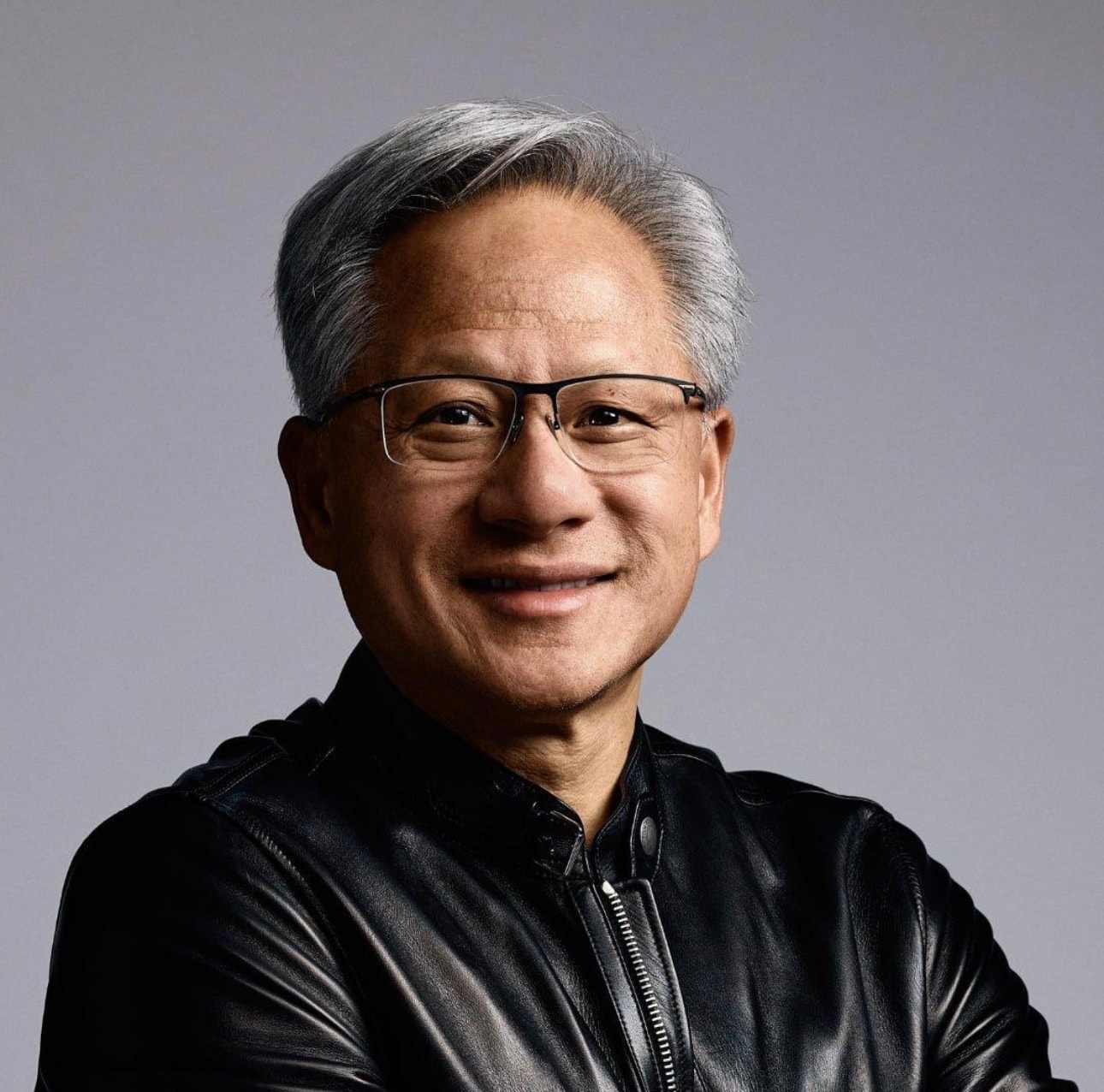
For years, Jensen Huang was best known within technology circles as the animated chief executive in the black leather jacket who led a company making high-performance graphics chips for gamers.
Today, Huang occupies a very different position.
As the founder and CEO of NVIDIA, he leads the company supplying much of the computing infrastructure behind the artificial intelligence economy. Its technology powers data centers, advanced AI models, autonomous systems, scientific research and a rapidly expanding generation of intelligent machines.
NVIDIA reported $215.9 billion in revenue for fiscal 2026, an increase of 65 percent from the previous year. Its fourth-quarter data center revenue alone reached $62.3 billion, reflecting the extraordinary demand for computing systems capable of training and operating modern AI.
The numbers are remarkable. But NVIDIA's rise is not simply the story of a company benefiting from a sudden technology boom.
It is the result of a strategic bet Huang began making more than three decades ago.
Huang founded NVIDIA in 1993 with Chris Malachowsky and Curtis Priem. The company's original mission centered on improving three-dimensional graphics for personal computers, particularly for the growing video game industry. Huang has served as NVIDIA's president and CEO since its founding.
At the time, graphics processing units were highly specialized tools. They were designed to rapidly perform the repetitive mathematical calculations needed to generate images and visual effects.
Huang saw something larger in that architecture.
Traditional central processing units complete tasks largely in sequence. Graphics processors are built to perform many calculations simultaneously. That parallel processing capability made GPUs exceptionally useful not only for graphics, but also for scientific simulations, data analysis and, eventually, artificial intelligence.
"Rather than treating the GPU as a component for a single market, NVIDIA began developing it into a broader computing platform. That distinction became the foundation of the company's future."
One of NVIDIA's most consequential moves came with the development of CUDA, a software platform introduced in 2006 that allowed developers to use NVIDIA GPUs for general computing.
CUDA made NVIDIA hardware more accessible to researchers and engineers working outside the gaming industry. Developers could use GPUs to accelerate complex workloads without having to design entirely new computing systems from the ground up.
The investment was risky. There was no guarantee that a large commercial market for GPU computing would develop.
But NVIDIA continued building the technology, software and developer relationships required to establish an ecosystem around accelerated computing. As artificial intelligence researchers began discovering that GPUs could dramatically reduce the time needed to train neural networks, NVIDIA already had much of the supporting infrastructure in place.
The company had not predicted every detail of the generative AI revolution. It had done something potentially more valuable: it had spent years preparing for a world in which traditional computing would no longer be sufficient.
NVIDIA is frequently described as a semiconductor company, but that description no longer captures the scale of its strategy.
Huang has positioned NVIDIA as a full-stack computing company.
Its business includes advanced processors, networking equipment, computing systems, development tools, AI models, simulation technology and industry-specific platforms. NVIDIA's data center technology is now used across cloud environments, enterprise facilities, edge computing systems and some of the world's most advanced research operations.
This approach gives NVIDIA influence across multiple layers of the AI economy.
The company does not simply sell the processors used to train an AI system. It provides much of the architecture surrounding those processors, making it easier for companies to build, deploy and scale their own AI operations.
That ecosystem has become one of NVIDIA's greatest competitive advantages.
"A company can produce a powerful chip. Building the software, technical knowledge, developer community and institutional trust surrounding that chip can take decades."
Huang understood early that the strongest technology businesses do not merely create products. They create environments that other businesses begin building around.
Huang's influence is not limited to product strategy.
He has become one of the technology industry's most recognizable communicators, capable of translating highly technical developments into expansive ideas about business, labor and society.
At NVIDIA's conferences, Huang rarely presents a processor as an isolated piece of hardware. He explains how it fits into a broader transformation of computing.
His central argument is that the traditional method of programming computers is changing. Instead of relying exclusively on developers to write precise instructions, companies are increasingly training AI systems to learn patterns, generate information and make decisions.
NVIDIA describes its work as extending across accelerated computing, AI factories, open models, autonomous agents and physical AI systems.
Huang's ability to articulate this shift has helped turn NVIDIA's product launches into declarations about the future of entire industries.
He is not simply marketing technology. He is giving executives, investors and governments a framework for understanding why that technology matters.
NVIDIA's current ambition extends far beyond the data center.
The company is investing in robotics, autonomous vehicles, digital simulations and what Huang calls physical AI: intelligent systems capable of perceiving and operating within the real world.
Through platforms such as Omniverse, Isaac and NVIDIA DRIVE, the company is developing tools that allow robots, vehicles and industrial systems to learn inside simulated environments before performing tasks in physical ones.
The strategy expands NVIDIA's potential market from software-based intelligence to almost every machine that could eventually become autonomous.
Factories can use simulations to redesign operations. Automakers can train driving systems against synthetic scenarios. Robotics companies can test machines in virtual environments before deploying them in warehouses, hospitals or homes.
The common requirement across these applications is enormous computing capacity.
NVIDIA wants to provide it.
Huang's leadership style is often described as demanding, direct and intensely involved.
Unlike companies built around rigid hierarchies, NVIDIA is known for a relatively flat management structure in which Huang receives information from a broad group of executives and employees. He has publicly emphasized constant evaluation, intellectual honesty and the importance of confronting difficult realities early.
His approach reflects the speed of the industry NVIDIA helped create.
In artificial intelligence, a company's strongest product can become outdated within a relatively short period. Competitive advantage depends on moving quickly while simultaneously preparing for technological shifts that may still be years away.
Huang has led NVIDIA by maintaining both perspectives.
He focuses on the immediate technical details while continuing to communicate a vision measured in decades.
That combination is difficult to sustain. Many founders are effective during a company's earliest stages but struggle to evolve as the organization grows. Others become skilled corporate operators but lose the product instincts that made their companies distinctive.
More than 30 years after NVIDIA was founded, Huang remains closely associated with both its technical direction and its broader identity.
NVIDIA's dominance also creates new challenges.
Its growth depends heavily on continued investment in AI infrastructure. Technology companies are spending extraordinary amounts of money to build data centers, purchase computing systems and develop increasingly sophisticated models.
The scale of that spending has raised questions about energy consumption, supply constraints, geopolitical competition and whether the financial returns from AI will ultimately justify the investment.
NVIDIA must also navigate export restrictions and the growing importance of advanced computing to national security. Its products are no longer treated as ordinary commercial technology. They have become strategic assets within a global competition for AI leadership.
The closer NVIDIA moves toward the center of the world's computing infrastructure, the more exposed it becomes to economic, regulatory and political forces beyond its control.
Its position is powerful, but it is not without vulnerability.
Jensen Huang's story is often framed as one of extraordinary timing.
That interpretation misses the larger lesson.
NVIDIA did not become central to artificial intelligence because Huang reacted faster than everyone else when ChatGPT arrived. It became central because the company had spent decades investing in accelerated computing, developer tools and a technical ecosystem that initially appeared far more ambitious than the available market required.
Huang built for a future many people could not yet see.
"When that future arrived, NVIDIA was ready."
His greatest accomplishment may not be creating one of the world's most influential technology companies. It may be demonstrating how enduring companies are built in the first place: through patience, conviction and the willingness to invest in an idea long before the rest of the market understands its value.
About the author
Tamara EdwardsTamara Edwards is a strategic communications advisor and public relations executive. She covers leadership, executive positioning, communications strategy, and the people shaping business and public influence.