Creative Profiles
Yayoi Kusama: The Dots That Conquered the World
Tamara Edwards9 min read
She recreates entire supermarkets, pharmacies, and corner stores entirely from hand-sewn felt. The result is one of the most recognizable and commercially successful immersive art practices in the world.
Arts & Business Contributor
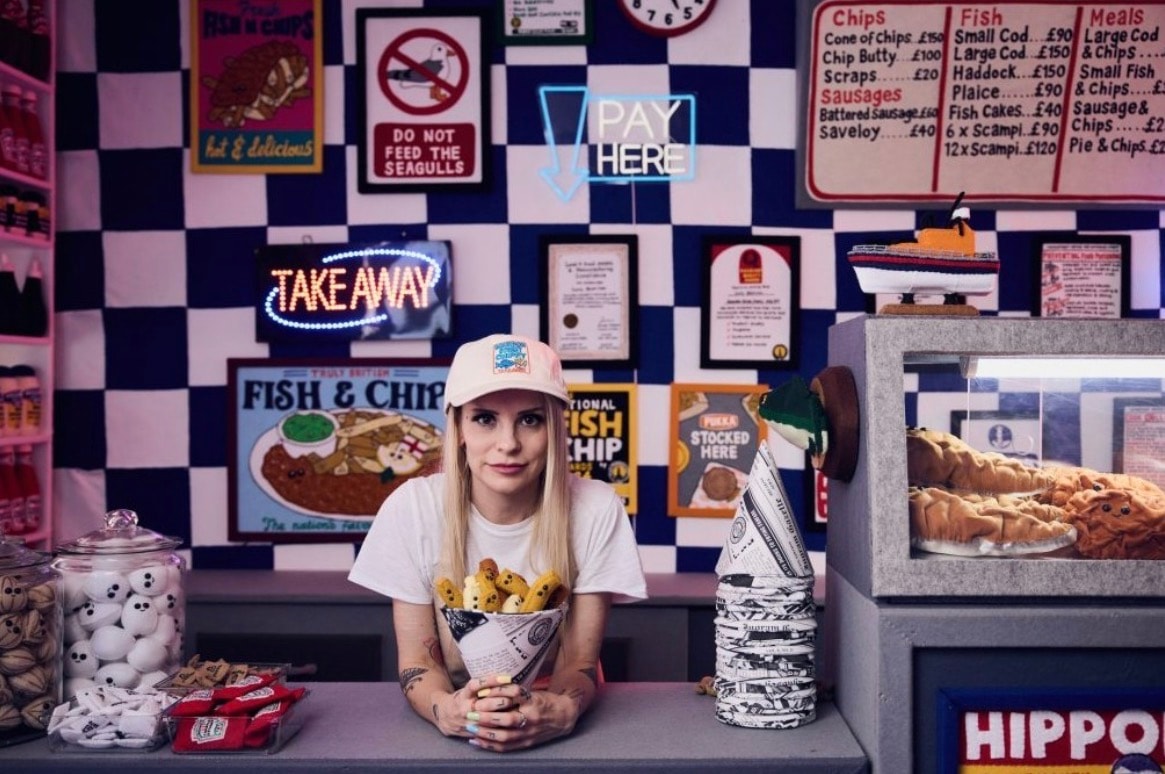
Walk into a Lucy Sparrow exhibition and your brain immediately begins negotiating between reality and imagination. The shelves look authentic. The products are instantly recognizable. The shopping baskets, checkout counters, handwritten signs, and overflowing displays all feel familiar. Then you reach for a carton of milk, a bag of chips, or a bunch of bananas and realize every single item has been meticulously hand-sewn from felt.
What could have remained a charming craft project has become one of the most recognizable artistic brands in contemporary art. Lucy Sparrow did not simply build an art career. She built an experience.
"I never wanted people to just look at the work. I wanted them to feel like they were inside it."
Many artists begin with a blank canvas. Lucy Sparrow begins with everyday life. A neighborhood convenience store. A pharmacy. A butcher shop. A grocery market. Instead of inventing fantasy worlds, Sparrow transforms ordinary places into immersive installations, recreating every detail with extraordinary precision. Every package is stitched by hand. Every label is individually embroidered. Every shelf is thoughtfully merchandised.
One of Sparrow's greatest business achievements is consistency. Long before visitors recognize the name of an exhibition, they recognize the artist behind it. Whether she is transforming a supermarket, corner store, pharmacy, or produce market, Sparrow's visual language remains unmistakable. Bright colors, playful wit, obsessive craftsmanship, and immersive storytelling have become creative assets audiences immediately associate with her name.
Perhaps Sparrow's most innovative idea is that her exhibitions do not simply display artwork. They function like stores. Visitors browse aisles, carry shopping baskets, interact with attendants, and purchase felt versions of familiar products. The shopping experience itself becomes part of the artwork. Collectors do not simply acquire a sculpture. They leave carrying what looks like groceries.
During SCOPE at Miami Art Week, she partnered with legendary DJ Fatboy Slim, who stepped behind the counter of her immersive felt installations as an employee rather than a celebrity guest. In 2023, he helped serve customers inside Feltz Bagels, and in 2024 he returned to her Blessed Be the Fruit produce stand as Fruitboy Slim, enthusiastically selling hand-sewn felt fruits and vegetables to collectors, fans, and curious visitors. The collaboration was not a traditional celebrity endorsement. It was performance art.
Artificial intelligence can generate artwork in seconds. Factories can mass-produce nearly anything. Lucy Sparrow's work moves deliberately in the opposite direction. Every object represents hours of cutting, stitching, sewing, and assembling by hand. That commitment to craftsmanship has become increasingly valuable in an age dominated by automation.
In today's economy, attention is one of the world's most valuable currencies. Lucy Sparrow earns it not through shock value or spectacle, but through delight. She has not just created immersive works of art. She has built a globally recognized creative business around joy itself.
About the author
Liz PlummerLiz Plummer is an executive producer, creative director, and arts contributor. She covers contemporary artists, design, architecture, creative entrepreneurship, and the cultural forces shaping modern business.