
Innovation
Seven Years of Light: How Aaron and Fluora Have Been Building Living Trees
Tamara Edwards6 min read
From formaldehyde sharks to golden mammoths, Hirst has spent three decades making contemporary art impossible to ignore, and inseparable from the places that house it.

Arts & Business Contributor
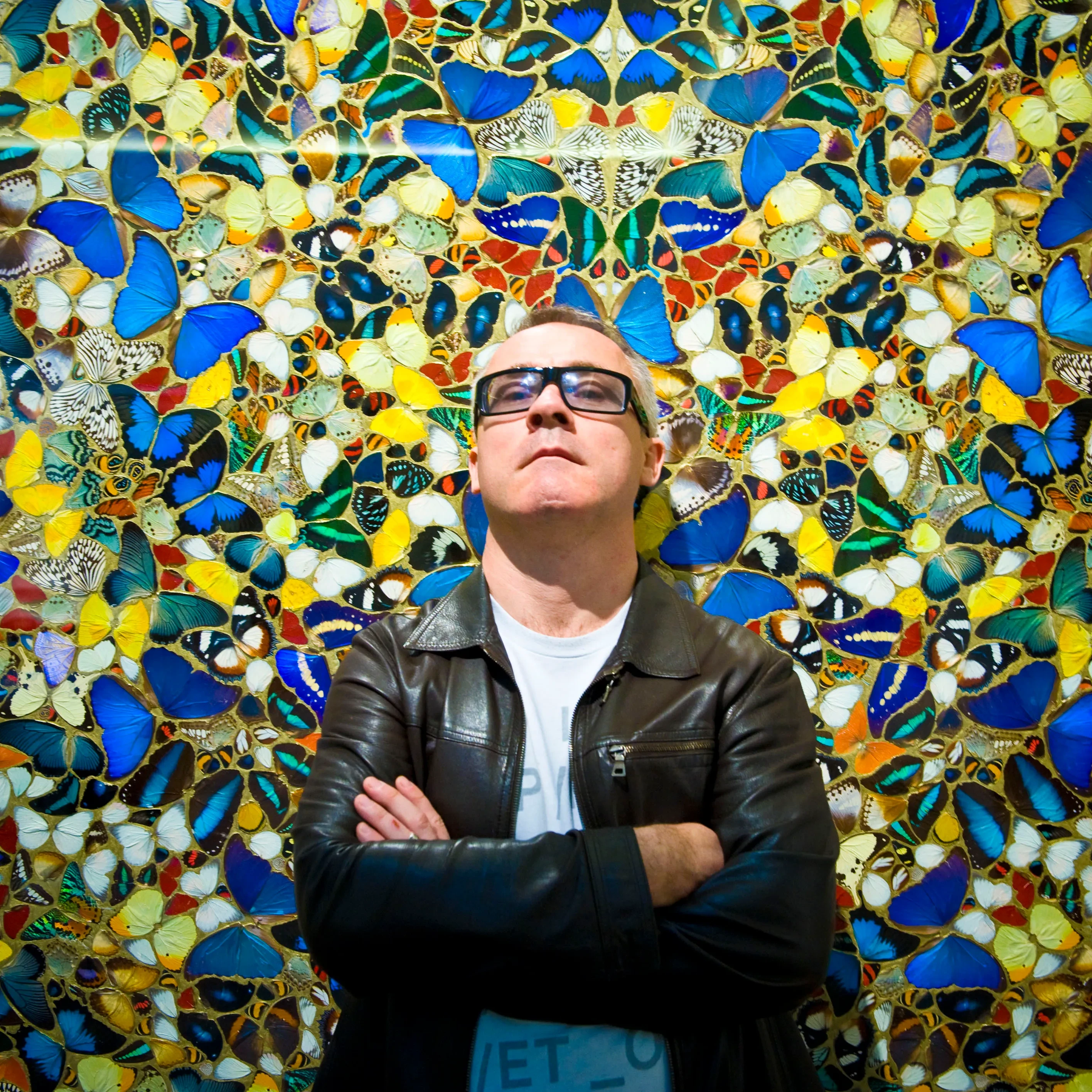
Few contemporary artists have shaped modern art quite like Damien Hirst. Instantly recognizable for his medicine cabinets, formaldehyde animals, butterfly installations, and colorful Spot Paintings, Hirst has spent more than three decades challenging the way collectors, critics, and the public define art. Whether celebrated as a visionary or criticized as a provocateur, one thing is undeniable: Damien Hirst transformed contemporary art into a global conversation.
As one of the leading figures of Britain's Young British Artists movement in the 1990s, Hirst built a career around confronting themes of mortality, science, beauty, and consumer culture. His work often asks uncomfortable questions. Why are we fascinated by death? Why do we assign value to objects? What makes something art in the first place?
"Those questions have made him one of the world's most recognizable living artists."
Unlike many artists whose work is experienced primarily inside museums, Hirst's pieces appear in hotels, private clubs, restaurants, airports, corporate collections, and public institutions around the world.
One of the most memorable examples can be found inside Soho House Berlin. Stepping into the lobby, visitors are immediately greeted by Hirst's enormous spray-painted Shark, a site-specific work created directly on construction boards before the club officially opened in 2010. What began as an impromptu piece during a "hard hat" opening event has since become one of the defining works in Soho House's global art collection. Even after a major refresh of the Berlin collection, the shark remains the artistic centerpiece of the lobby and one of the club's most recognizable installations.
Thousands of miles away in Miami Beach, Hirst created an entirely different kind of landmark.
Outside Faena Miami Beach, between the hotel and the Atlantic Ocean, stands Gone But Not Forgotten, an almost ten-foot-tall woolly mammoth skeleton covered in 24-karat gold leaf and enclosed within a monumental glass vitrine. Equal parts sculpture, spectacle, and philosophical statement, the piece has become one of Miami's most photographed works of public art and arguably the defining image of the Faena property itself.
The juxtaposition is classic Hirst. A prehistoric creature rendered in precious gold sits against a backdrop of turquoise water and swaying palms, forcing viewers to contemplate extinction, luxury, mythology, and human ambition all at once. At Faena, the sculpture isn't simply decoration. It anchors the entire experience, turning the hotel's gardens into an open-air gallery where hospitality and contemporary art become inseparable.
Hirst's work can be found in many of the world's leading cultural institutions and private collections, including Newport Street Gallery in London, Tate Modern, Gagosian galleries worldwide, The Broad in Los Angeles, the Museum of Modern Art in New York, and Astrup Fearnley Museet in Oslo.
His artwork also appears in luxury hotels, private clubs, corporate headquarters, and private collections across Europe, Asia, the Middle East, and North America, making him one of the most widely exhibited living artists outside traditional museum settings.
Perhaps Hirst's greatest achievement isn't simply creating memorable works. It's making contemporary art part of everyday life.
Collectors discuss his auction records. Fashion designers borrow his visual language. Interior designers reference his color palettes. Luxury hotels commission his work not simply to decorate a space, but to define it.
"Hirst's art has become inseparable from the identity of the places that house it. These are destinations where travelers arrive expecting exceptional hospitality but leave talking about the artwork."
Whether viewed as brilliant, controversial, commercial, or all three, Damien Hirst remains one of the rare artists whose work can transform not just a gallery, but an entire destination. His work doesn't wait quietly inside a museum for visitors to discover it. Instead, it becomes part of the experience itself, blurring the lines between architecture, hospitality, design, and contemporary culture.
About the author
Liz PlummerLiz Plummer is an executive producer, creative director, and arts contributor. She covers contemporary artists, design, architecture, creative entrepreneurship, and the cultural forces shaping modern business.